Posts

Showing posts with the label how do you stop algae growing in a fish tank

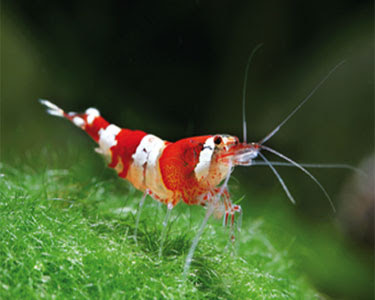
The Great Freshwater Algae Eaters Shrimp in Fish Tank: Crystal Red Shrimp
Image
The GreatFreshwater Algae Eaters Shrimp in Fish Tank: Crystal Red Shrimp – The Crystal Red Shrimp (CRS), that will be also occasionally known as Red bee shrimp, is definitely a lovely complement to any small planted tank. It's gorgeous candy cane striped shade making it among the most wanted shrimp in the freshwater aquarium hobby.  Photo copyright from aquariumdomain.com  The Great Freshwater Algae Eaters Shrimp in Fish Tank: Crystal Red Shrimp The crystal Red shrimp come in the mutation of its particular grading technique and a bee shrimp is similar to that of the red sherry shrimp. Different qualities inside the crystal shrimp are as a result of selective reproduction making them more precious within the hobby. There are also cases of the crystal red shrimp consuming their exoskeleton(molten cover), deceased fish inverts and live worms. After you see this species in-person you will understand why so many shrimp collectors are in love with the Gem Red S...
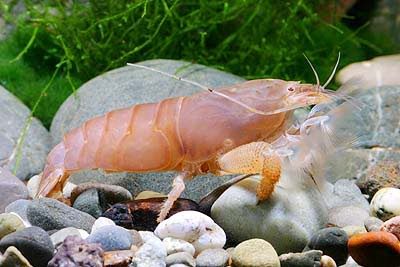
Excellent Freshwater Algae Eaters in Aquariums: Vampire Shrimp

Image
ExcellentFreshwater Algae Eaters in Aquariums: Vampire Shrimp – Vampire Shrimp, Atya gabonensis, also called African Fan Shrimp, Giant African Fan Shrimp, African Filter Shrimp, Giant African Filter Shrimp, Gabon Shrimp, or Viper Shrimp, are natives of areas of South America and parts of Western Africa. Photo copyright from angelfishaquatics.co.uk  Excellent Freshwater Algae Eaters in Aquariums: Vampire Shrimp Vampire Shrimp are peaceful on the bashful side and they enjoy little places to hide. At exactly the same time, Vampire Shrimp appears to be rather social with other filter shrimp. They seem to be quite secure hanging out with other freshwater shrimp, notably Bamboo Shrimp in the water current. We'd no idea they were filter feeders (like the Flower Shrimp) and wouldn't hurt a water flea. We do have to confess that "vampire shrimp" sounds much more alluring than "African filter shrimp." However, if you treat your vampire shrimp exa...

The Best Freshwater Algae Eaters in Aquariums: Amazon Sailfin Pleco

Image
The BestFreshwater Algae Eaters in Aquariums: Amazon Sailfin Pleco – It is one of several species generally called the common pleco or "Amazon Sailfin Pleco"[citation needed] by aquarists. It'll grow to a maximum length of 42.3 centimetres (16.7 in) SL. Pterygoplichthys pardalis is occasionally mistaken with the Hypostomus plecostomus (another armored catfish referred to as the "common plecostomus"). Photo copyright from aqualandpetsplus.com  The Best Freshwater Algae Eaters in Aquariums: Amazon Sailfin Pleco This fish may become more agressive, especially to other plecos. It is a very hardy fish nevertheless, and is a good add-on to larger tanks. When of a suitable size has the capacity to hold its own with most other fishes. Driftwood ought to be comprised in the tank. Plecos will frequently eat live plants in the tank. As this signals, when buying a specimen, do not buy fish with hollow stomachs the fish has not eaten recently, and will mos...

Effective Freshwater Algae Eaters in Tropical Tanks: Silver Molly

Image
EffectiveFreshwater Algae Eaters in Tropical Tanks: Silver Molly – Poecilia sphenops is a species of fish, of the genus Poecilia, known under the common name molly; to differentiate it from its congeners, it's sometimes called short-finned molly or common. They inhabit coastal brackish and fresh water streams and marine waters of Mexico.  Photo copyright from goliadfarms.com  Effective Freshwater Algae Eaters in Tropical Tanks: Silver Molly The wild type fish are a flat silvery color, often scattered black all over. The common molly can create fertile hybrids with many Poecilia species the sailfin molly. The male black mollies typically are usually slightly competitive. Mollies are only American fish, seen especially around the Southern United States and Central America. Three kinds have been kept by aquarists for decades, while many fish in this genus are available in the wild. These really are the Common or Short-finned Molly Poecilia sphenops, the Mexi...

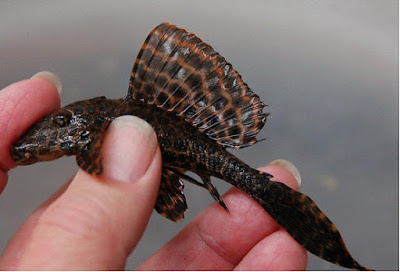
Excellent Freshwater Algae Eaters in Aquariums: Salfin Pleco

Image
ExcellentFreshwater Algae Eaters in Aquariums: Salfin Pleco – The Sailfin or Leopard Pleco is an upkeep fish that is popular, regularly sharing its habitat with other community fish. They typically eat whatever another fish don’t are true omnivores, and get, happy to chow down to a chunk of cucumber that is blanched. Photo copyright from aquaiumdomain.com  Excellent Freshwater Algae Eaters in Aquariums: Salfin Pleco These fish that is notable come from Amazon River basins and the Orinco in Brazil, Ecuador, Peru, and Venezuela. They have been seen in slow-moving, slow river waters and move to flooded areas during the wet season. They love to burrow into banks that are muddy to make their dwellings. Some people differ on precisely how these fish are, but generally they can coexist peacefully with any variety of fish so long as there’s considerable food. If they’re alone and still being aggressive towards other fish, it could be a result of a dearth of food, whic...

Perfect Freshwater Algae Eaters in Aquariums: Zebra Otocinclus

Image
PerfectFreshwater Algae Eaters in Aquariums: Zebra Otocinclus – The Zebra Otocinclus (Otocinclus cocama) is among the smallest catfish in the Loricariidae family and is a voracious algae eating machine. Named for the Cocama-Cocamilla Indian tribes that used to be dominant in the low Ucayali and lower Marañon region of Peru, tropical fish also refers to as Zebra oto or the Tiger oto Otocinclus cocama keeping enthusiasts. Photo copyright from aquaticquotient.com  Perfect Freshwater Algae Eaters in Aquariums: Zebra Otocinclus Colour of the body is beige-grey. These stripes are dashed plus they produce a design just like a zebra's stripes. The head of the fish is nearly entirely dark. The fish has beige-yellow under side. The caudal fin has shadowy edge which looks like ”w” letter. The dorsal fin is dark. This species has a sucker-mouth. The gender of the fish may be comprehended when they are sexually developed. Female is thicker than male in the ventral parts. ...

Effective Freshwater Algae Eaters in Tropical Tanks: Golden Cloud Pleco

Image
EffectiveFreshwater Algae Eaters in Tropical Tanks: Golden Cloud Pleco – The Scobinancistrus genera have an unusual dentition. They have 3 to 4 teeth in every single half of the upper jaw and also the same in the lower jaw. Similar to Scobinancistrus pariolispos and may be a form of the species. Photo copyright from  elite-pets.narod.ru Effective Freshwater Algae Eaters in Tropical Tanks: Golden Cloud Pleco As juveniles, these fish could be held in little groups but as they grow they will become territorial in the tank. Scobinancistrus pariolispos prefer subdued lighting and add wood or stone to create hiding places, adding floating plants will also create shading areas. Scobinancistrus is a genus of armored catfishes native to the southeastern Amazon Basin in Brazil. An extremely similar (possibly identical) form can be exported in the Rio Xingu and underneath the identity of L048. As you CAn't tell them apart from pictures we've lumped the two together her...

Cleaner Fish Freshwater Algae Eaters in Fish Tank: Leopard Frog Pleco

Image
Cleaner FishFreshwater Algae Eaters in Fish Tank: Leopard Frog Pleco – This species is differentiated from all its congeners by the following characters: a clear stripe within the dark brown bars running from snout tip to anterior margin of eyes (vs. lack of the clear stripe and a mottled look in P. vittata, and a mixture of vermiculations and spots on the head of the other congeners); except from P. bachi, by the existence of small dark brown spots just on fin rays, scarcely reaching the interradial membranes (vs. dark spots on interradial membranes or dark stripes covering the entire fin or simple). Photo copyright from cheapfish.co.uk  Cleaner Fish Freshwater Algae Eaters in Fish Tank: Leopard Frog Pleco Except from P. bachi by the interorbital space, 31.1-32.9 (vs. 51.5-71.0% HL); except from P. bachi, P. braueri, P. brevis , P. cavatica, P. lineola and P. vittata by its bigger cleithral width 32.3-34.6 (vs. 20.8-32.4% SL); except from P. cavatica, P. snethlag...

The Great Freshwater Algae Eaters in Fish Tank: Leopard Cactus Pleco

Image
The GreatFreshwater Algae Eaters in Fish Tank: Leopard Cactus Pleco – As they develop leopard cactus pleco’s are typically peaceful but will become territorial. They prefer subdued add bog wood and lighting or similar to the tank to create hiding places. It's a waste producer that is high so outstanding filtration is needed in addition to regular water changes. So they are best kept in a bigger aquarium, the mature size of this fish is quite big. Photo copyright from piranha-info.com  The Great Freshwater Algae Eaters in Fish Tank: Leopard Cactus Pleco As juveniles the fins of the leopard-cactus pleco is going to have yellowish colouration but as the yellow matures will fade along with the finnage will take about the exact same camouflage pattern as the main body. These fish require lots of open space in the underside of the aquarium put set ups aren't ideal. It is much better to utilize sand and add pieces of wood or pvc piping to provide hiding places and n...

The Best Freshwater Algae Eaters for Planted Tank: Longfinned Bristlenose Pleco

Image
The BestFreshwater Algae Eaters for Planted Tank: Longfinned Bristlenose Pleco – Ancistrus have for ages been popular aquarium fish, mainly for his or her world-famous reputation have been present in the aquarium hobby since at least the early 1900s, and as champ algae eaters. Photo copyright from imperialtropicals.com The Best Freshwater Algae Eaters for Planted Tank: Longfinned Bristlenose Pleco Of interest, Axelrod states that commercial reproduction of the fish tried but was not able to raise the fry into a size that is saleable. The next post I could locate was a 1979 article by the famous Hans-Joachim Franke of the then East Germany. Franke's photos, in "Breeding Aquarium Fishes: Novel 6," reveal photographs of what we today call Ancistrus sp. 3 in the avocation. Franke failed to offer a specific identity because of his fish nor state where they were imported from. Perhaps of historical interest, Franke's article was also the very first ref...